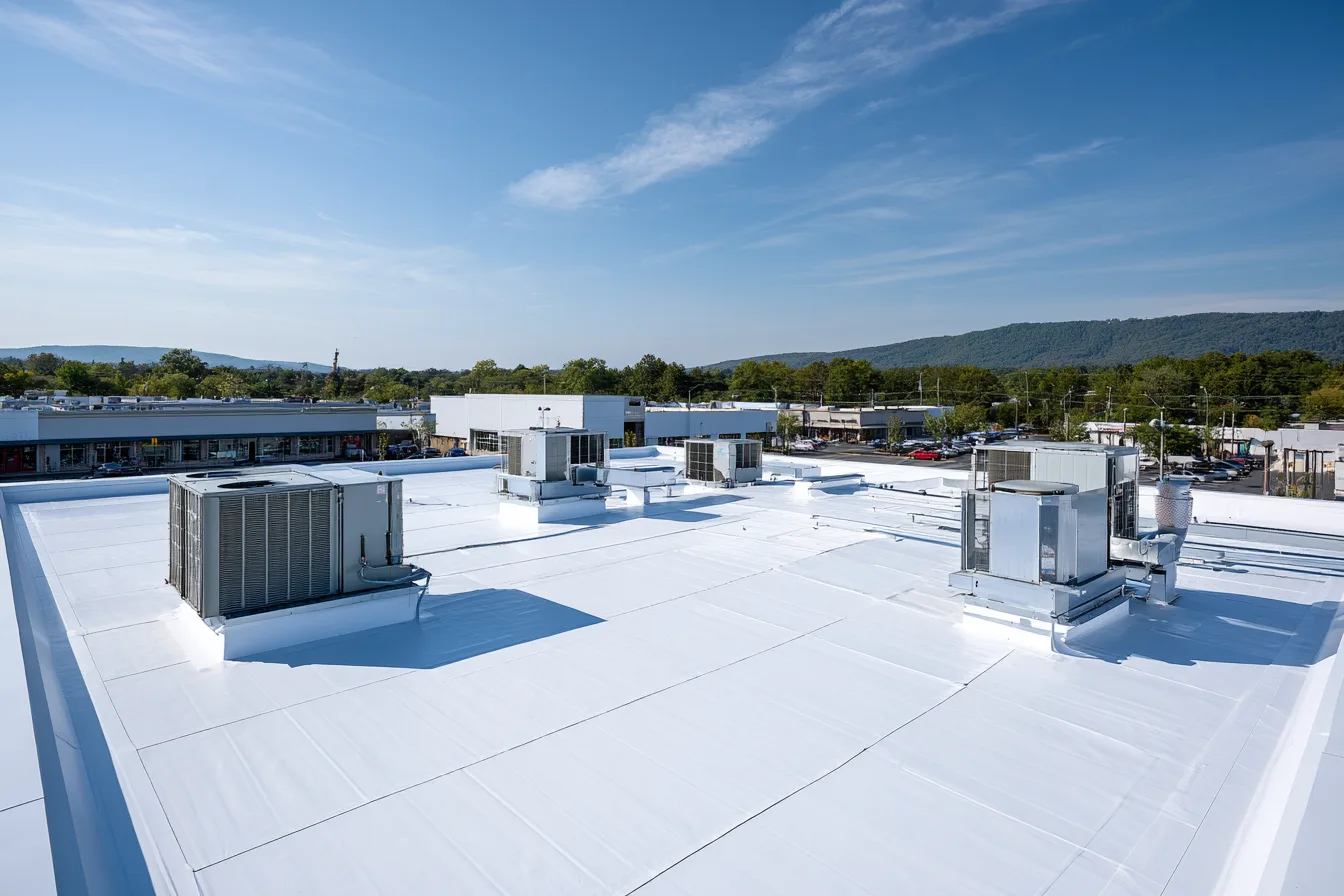
Commercial roofing in Sapulpa, OK
Protect the work happening below your roof. Explore repair, coating and replacement choices for a commercial property, with roof condition and building access at the center of the plan.
Roofing decisions for an occupied Sapulpa building
Water above a work area or stored goods changes the day’s priorities. The first concern is the affected space. The roofing decision also has to account for the membrane, the drainage system and any moisture that has reached insulation beneath the surface.
A commercial roof inspection looks beyond the point where water shows indoors. Seams, equipment curbs, drains and perimeter details all give water a potential path. The existing system needs to be identified before a compatible repair or restoration approach is chosen.
A limited defect over sound, dry layers may support a local repair. A roof with a suitable substrate may be a candidate for restoration. Wet insulation, a failing deck or widespread breakdown can require removal and replacement of affected layers. Those findings set the work plan for the building.
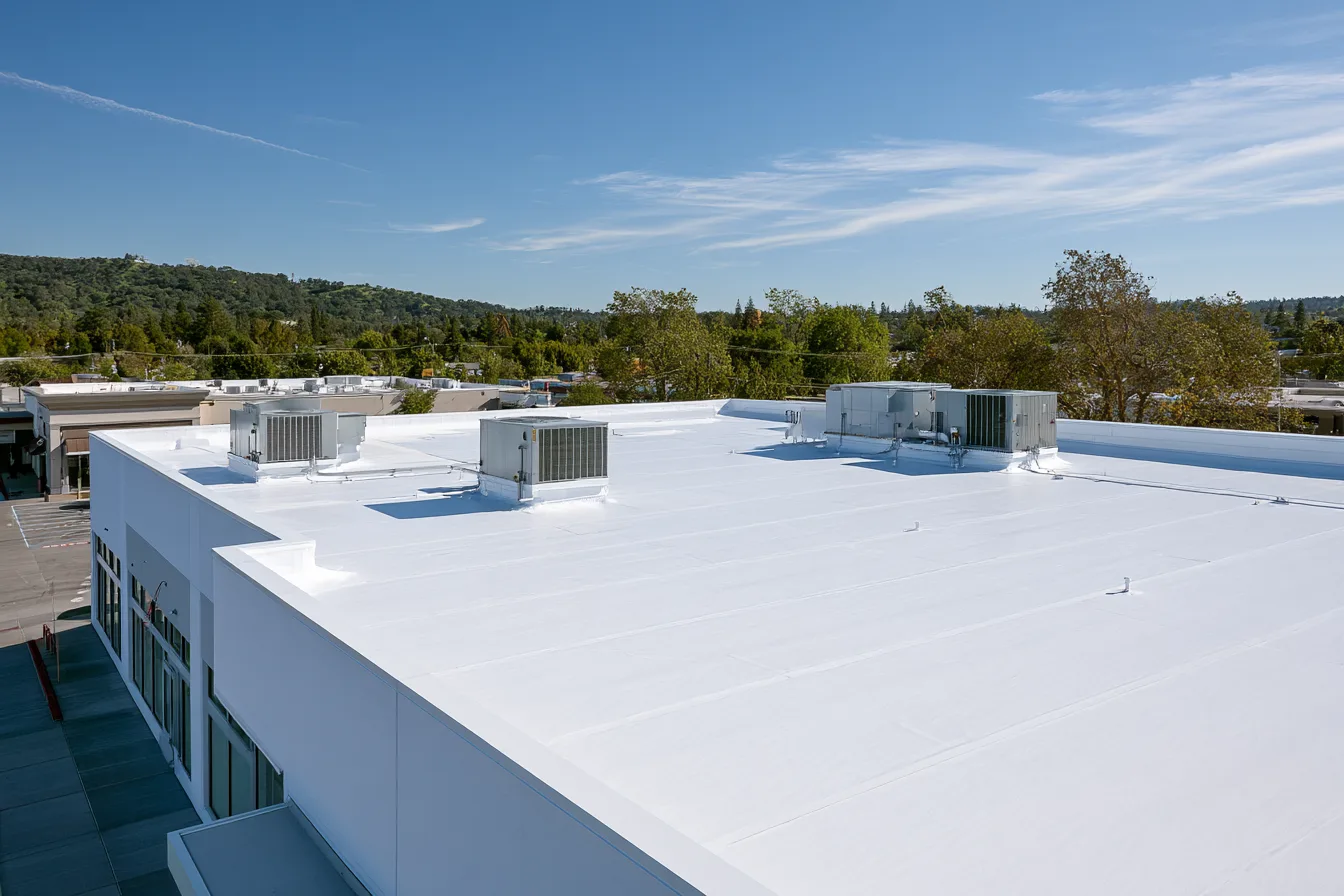
Repair, restore or replace a commercial roof?
The roof surface alone does not settle the choice. The condition below it and the route water takes off the building remain part of every option.
GAF’s liquid-applied roofing manual requires wet insulation to be replaced before coating. Product and substrate requirements govern the actual restoration scope.
Commercial roof systems and services in Sapulpa
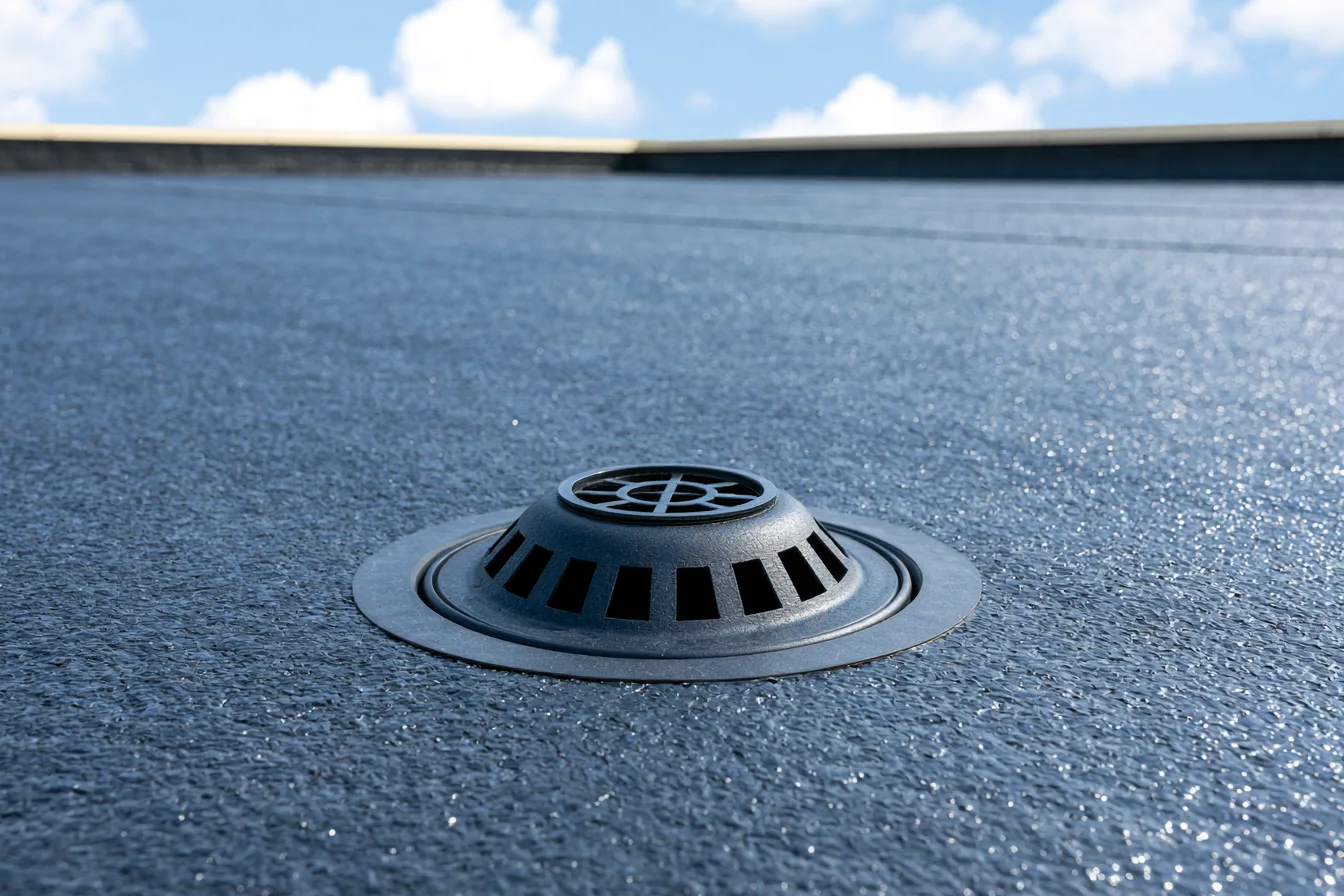
Choose the work around the existing assembly and its water paths. The roof drain shown here is one of the details that must remain functional through repair, coating or replacement.
TPO roofing
TPO membrane roofing uses heat-welded seams and compatible details around penetrations and edges. Repair requires a suitable existing membrane; replacement also involves the supporting insulation, fastening or adhesion and perimeter conditions.
Roof coatings
A coating can renew a compatible, repairable surface after cleaning, preparation and detail work. It is not a shortcut around wet insulation, loose material or drainage defects that need physical correction.
Flat-roof repair
Low-slope roof repair can address membrane splits, failed seams, curbs, drains and perimeter flashing. Following the water path and checking the layers below helps define how far the repair needs to extend.
Inspect the commercial roof beyond the leak
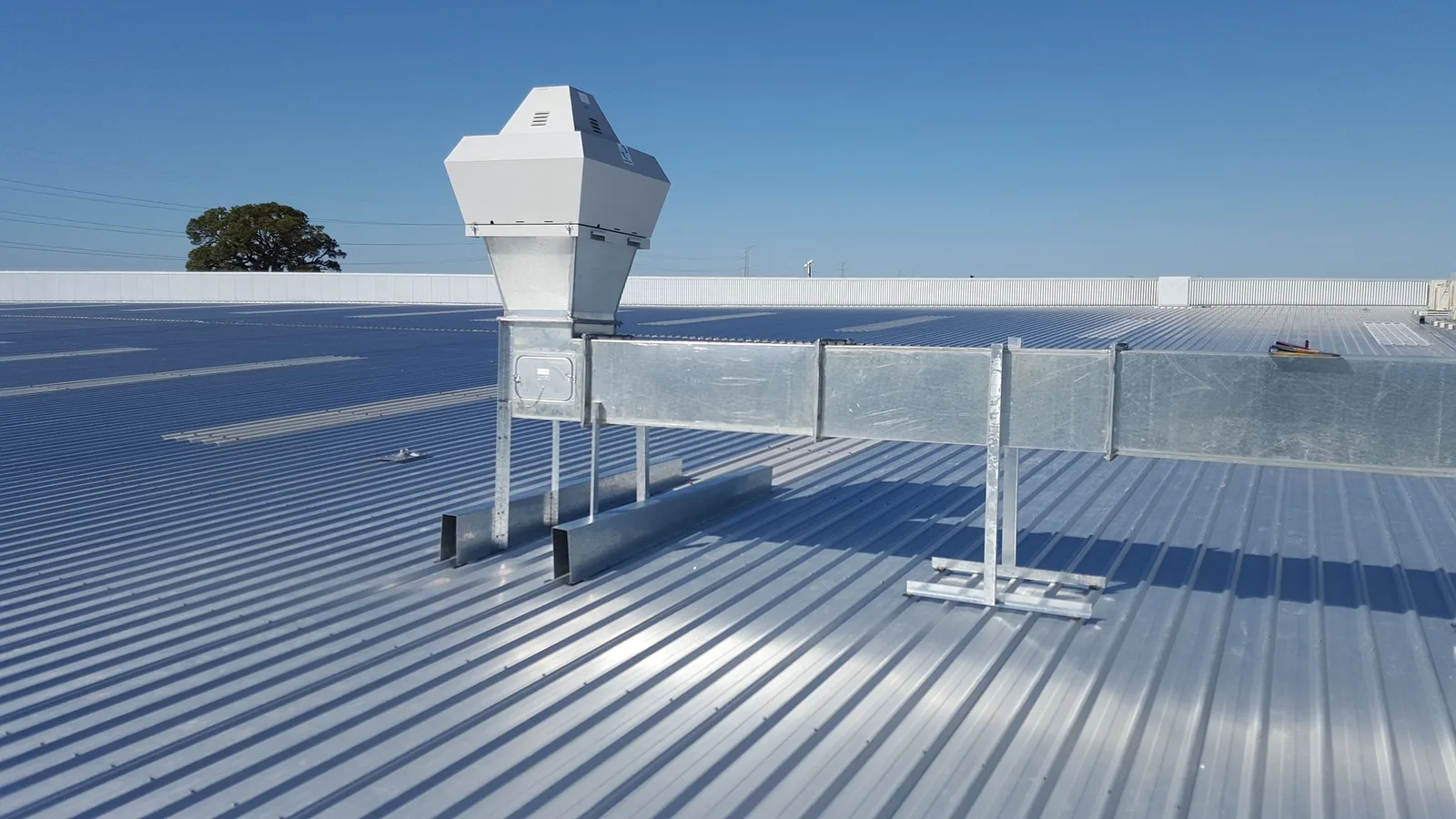
An opening near rooftop equipment can be only one part of the problem. A useful roof walk considers the roof as a connected assembly.
Field, seams and penetrations
The main roof surface and its seams are checked alongside equipment curbs, pipes and other openings. Previous patches need to be considered because their materials and attachment can affect the next repair.
Edges, walls and drainage
Parapet flashings, edge metal, drains and scuppers finish the water path. Water that remains on the roof can expose weak details for longer. Drainage blockages and physical low areas call for different work.
What lies beneath the surface
Signs of trapped moisture or movement can justify further investigation of insulation and decking. A visual inspection cannot establish the condition of every concealed layer. The scope needs to allow for those findings before a restoration decision is made.
Plan Sapulpa roof work around building operations
Roof work and building operations need a coordinated sequence. Describe the way the property is occupied when requesting the roof walk.
- Access and building use
Roof hatches, ladders, loading areas and tenant entrances affect access. Work zones and material staging need to account for people entering the building, deliveries and the normal use of the property.
- Equipment and other trades
Roofing around HVAC units or service lines may require coordination with the people responsible for that equipment. Moving or disconnecting equipment is different work from renewing its roof flashing.
- Removal and weather exposure
The amount opened at one time affects protection of the interior. A replacement plan considers temporary weather protection and how each work area will be closed, along with the practical limits of keeping the building occupied.
- Scope and pricing
Roof area, access, tear-off, insulation condition and the number of penetrations all affect cost. Drainage changes and deck repair can be significant parts of the project. The residential shingle calculator does not price a commercial membrane or coating job.
Commercial Roofing FAQs
Can a coating stop leaks over wet insulation?
No. Wet insulation must be investigated and removed where required before a suitable roof is coated. Coating the top surface leaves moisture and deteriorated material in the assembly. The substrate, repairs and drainage all need to suit the selected system.
Can a commercial roof be repaired while the building is occupied?
Often it can, with an appropriate access and protection plan. The answer depends on the roof work, the building’s use and any equipment or areas that must be isolated. Discuss tenant entrances, sensitive rooms and delivery routes during planning.
What information helps with a commercial roof inspection?
The address, where water appeared and how the building is used are useful starting points. If roof plans, past repair details or warranty documents are already available, they can help identify the system. You do not need to determine the membrane type before requesting a roof walk.
Start with the roof and the way your building works
Tell us about the leak, the roof system if known and the way the building is used. A free roof inspection can help establish the repairable layers, drainage needs and options for the occupied property.