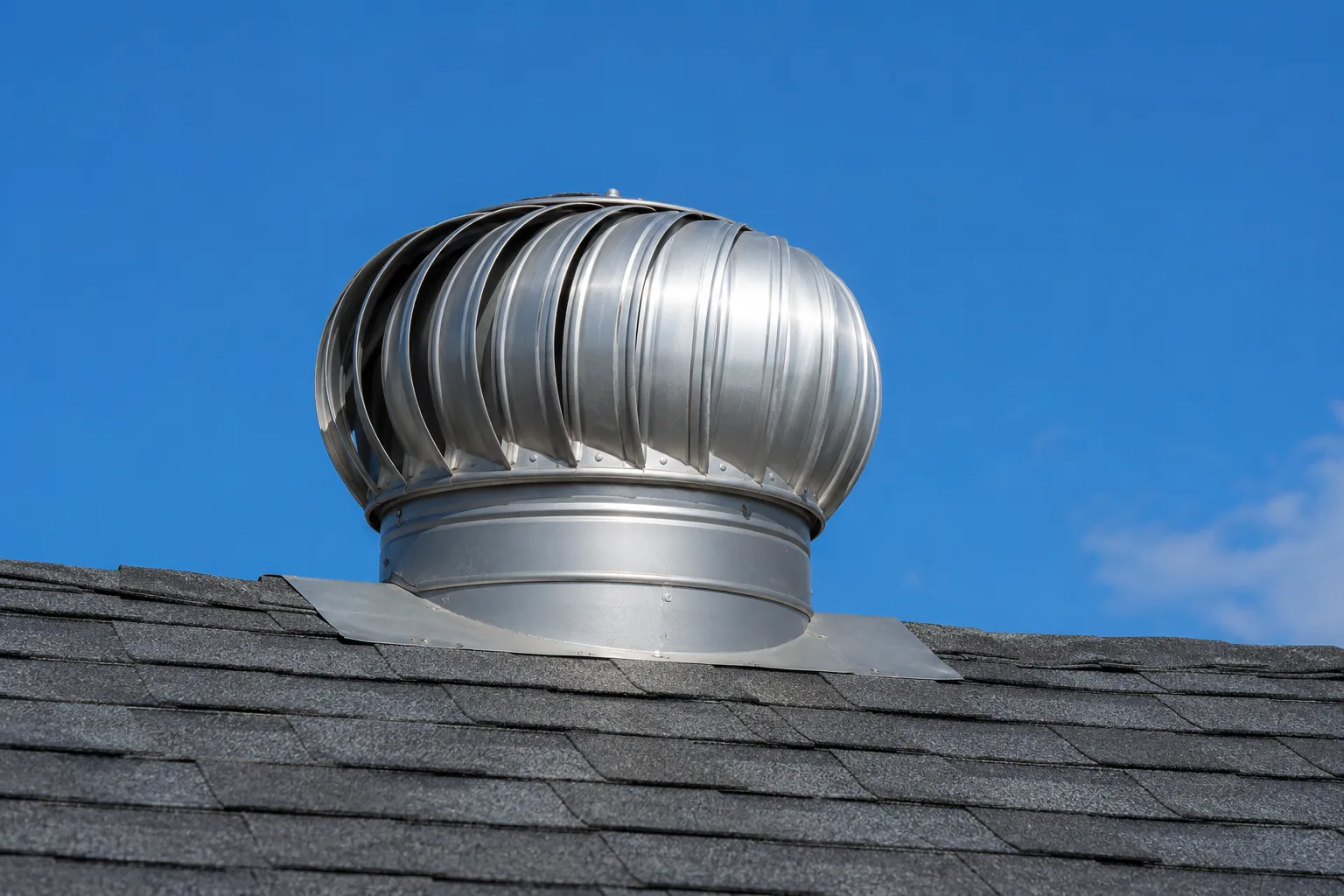
Roof ventilation in Sapulpa, OK
A vented attic needs a clear route for air to enter and leave. Address intake, exhaust and moisture sources together when planning roof work.
Balance roof intake and exhaust in Sapulpa
Adding a vent changes an opening in the roof. It does not automatically create useful airflow through the attic. A vented attic needs intake low on the assembly, exhaust high on it and an unobstructed path between them.
Blocked soffits, disconnected attic compartments or an unsuitable exhaust arrangement can leave parts of the space poorly ventilated. Moisture from indoor air or a duct ending inside the attic creates another problem that extra openings alone may not solve.
Ventilation, insulation and air sealing have different jobs. Insulation slows heat transfer, air sealing limits air leakage from the house, and ventilation manages airflow in an attic designed for it. Roof work should account for that existing assembly before changing vents.
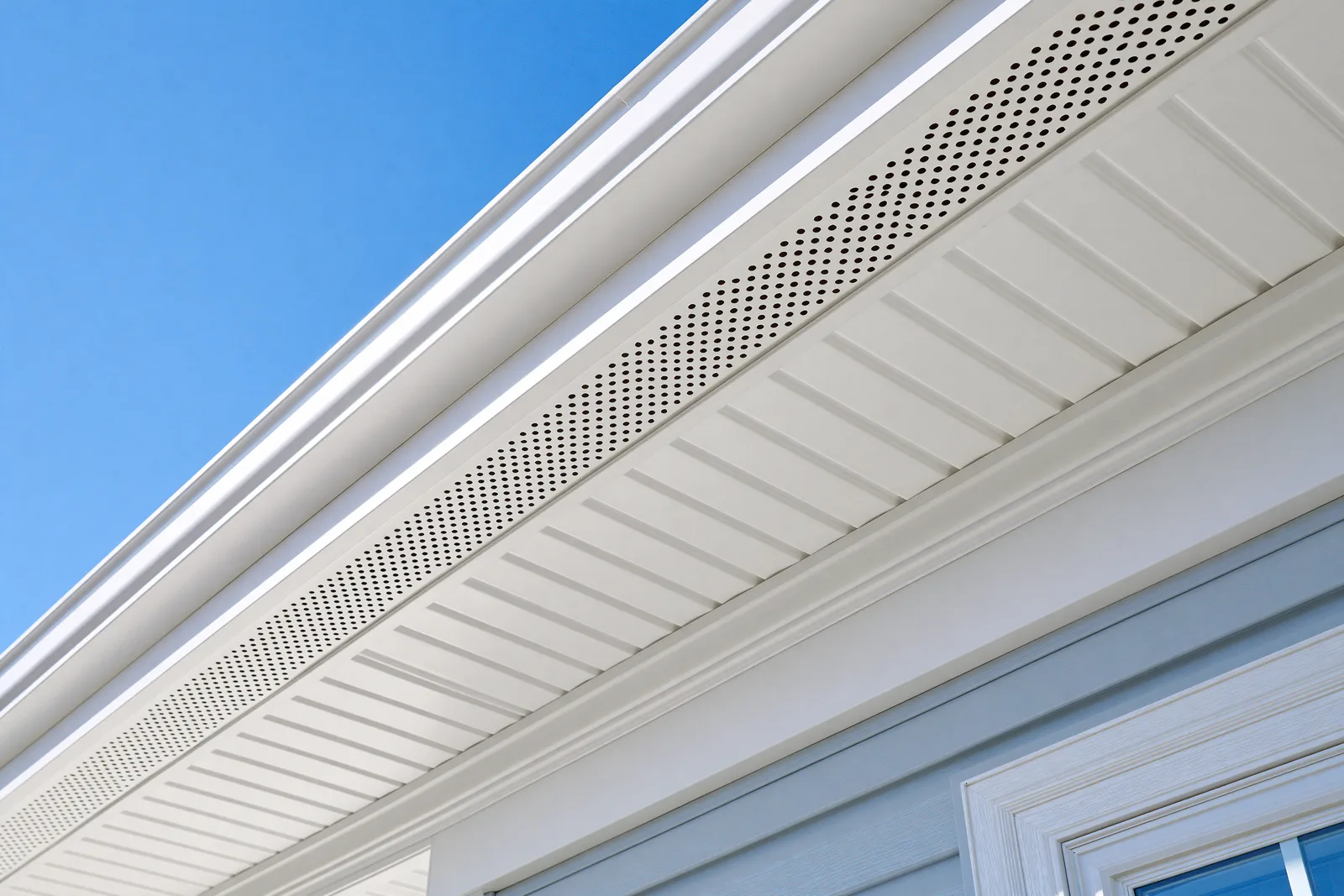
Blocked intake, poor exhaust or indoor moisture
Owens Corning’s roofing-system guidance distinguishes intake, exhaust and insulation as separate parts of the roof and attic system.

Ventilation work during a reroof
Replacement is a useful time to coordinate openings because the covering and ridge details are already being renewed.
Match the openings to the roof
A long ridge, a short ridge and separate attic compartments present different layouts. The vent manufacturer’s net-free-area and installation requirements matter more than the number of visible vents.
Preserve a weather-resistant connection
Roof vents and ridge systems still need correct flashing, fastening and covering. Reusing an unsuitable opening can leave a leak path even if the airflow target is sensible.
Keep the intake route open
Eave openings need a passage past the insulation. Where baffles are part of the assembly, their purpose is to keep that route from being blocked, not to replace the insulation itself.
What affects a ventilation repair
- Existing roof and attic access
The covering’s condition affects how an opening can be changed and tied back into the roof. Attic layout, access and concealed obstructions can change the investigation and repair scope.
- The type of system
A roof designed as an unvented assembly should not receive added vents by assumption. The existing insulation and air-control approach needs to be understood first.
- Related trades and price
Powered equipment may involve electrical work, and moisture sources can involve ducts or air sealing. Separate those needs from the roofing scope. Access, compatible materials and the amount of covering opened determine the roof work, without a promised energy-saving result.
Roof Ventilation FAQs
Will adding a ridge vent solve attic moisture?
Not by itself. A ridge vent needs suitable intake and a clear airflow route, and indoor moisture sources may need correction. First establish whether the attic is designed to be vented and what is causing the moisture.
Should different exhaust vent types be mixed?
Mixing exhaust types can change the intended airflow and allow one opening to draw through another instead of through the intake. The arrangement should follow a coordinated design and the selected manufacturer’s requirements.
Can ventilation work be planned with replacement?
Yes. Replacement provides a useful opportunity to coordinate ridge openings, other roof vents, flashing and intake. The attic layout and any related insulation or air-sealing work still need to be considered.
Discuss your roof and attic ventilation
Tell us about the attic or roof concern you have noticed. A free roof inspection can help identify the roofing part of the problem and how it fits a repair or replacement.